PENLEY HOSPITAL CONSULTATION
Betsi Cadwaladr University Health Board’s consultation on the future of services at Penley Community Hospital is now open and runs until 7 October 2026.
More information that can be found at: Shaping the Future of Penley Hospital – Betsi Cadwaladr University Health Board
HAVE YOUR SAY NOW ON PENLEY HOSPITAL
The decision being made on Penley Hospital will affect local healthcare for years to come. If you believe people deserve to recover closer to home, remain independent for longer and receive the support they need in their own community, now is the time to speak up. Responses from the first consultation won’t carry over, so please take a few minutes to share your views again.
We need your support.
- Complete the Betsi Cadwaladr University Health Board consultation.
- Tell family, friends and neighbours to do the same.
- Support a community-led future for Penley Hospital.
- Advocate for local community-based services.
If you don’t have your say, decisions will be made without you.
The BCUHC Consultation period ends: 7th October. Support the Rainbow Pathway by filling in the consultation document. Select “None of these options” and write “Rainbow Foundation Pathway” in the alternative suggestion box.
THIS IS NOT ABOUT A BUILDING. IT’S ABOUT PEOPLE.
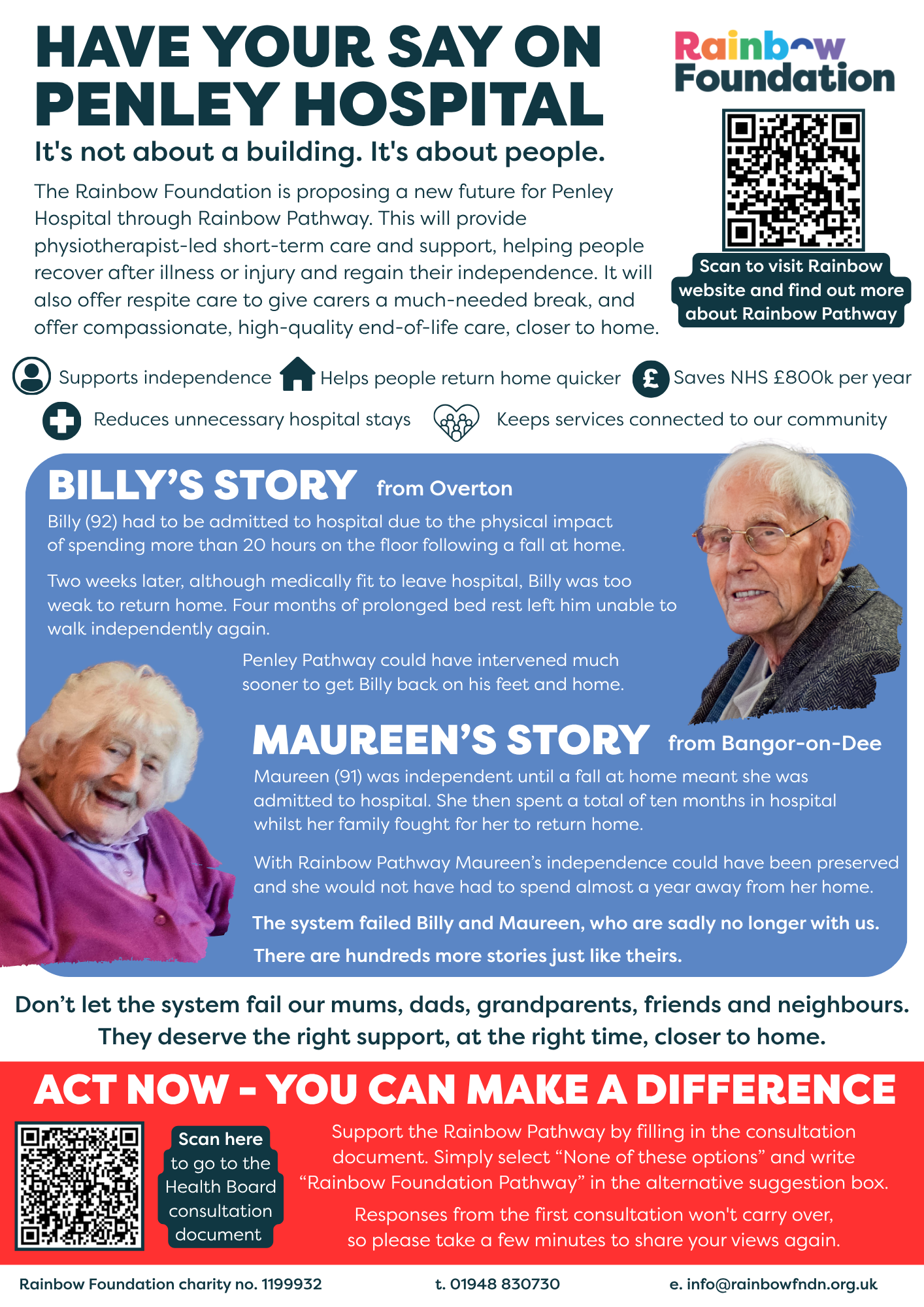
Billy spent 4 months in hospital and was never able to walk unaided again.
Maureen spent 10 months confined to bed despite being well enough to leave hospital.
Sybil entered hospital living independently and left months later in a wheelchair.
Every day, older people like Billy, Maureen and Sybil remain in hospital longer than they need to because there isn’t enough community support available to help them recover and return home safely.
The result? Hospital beds are blocked.
More than 15,000 hospital bed days in Wrexham are currently occupied by people who are well enough to leave hospital but have nowhere suitable to recover.
That means people in need of treatment, operations and hospital care are facing unnecessary delays.
Older people lose independence. The longer people stay in hospital, the harder it becomes to get back to normal life. Days can quickly become weeks. Mobility declines. Confidence falls. Independence is lost. People who could have recovered closer to home end up needing more support simply because they stayed in hospital too long. Some of them never make it home.
Families and carers are left picking up the pieces. When recovery services aren’t available locally, the pressure doesn’t disappear. It falls on families, carers and already stretched community services. Communities end up carrying the burden of a system that is failing older people.
Because one day it won’t be Margaret. Or Billy. Or Sybil.
It will be someone you love. Or it could be you.
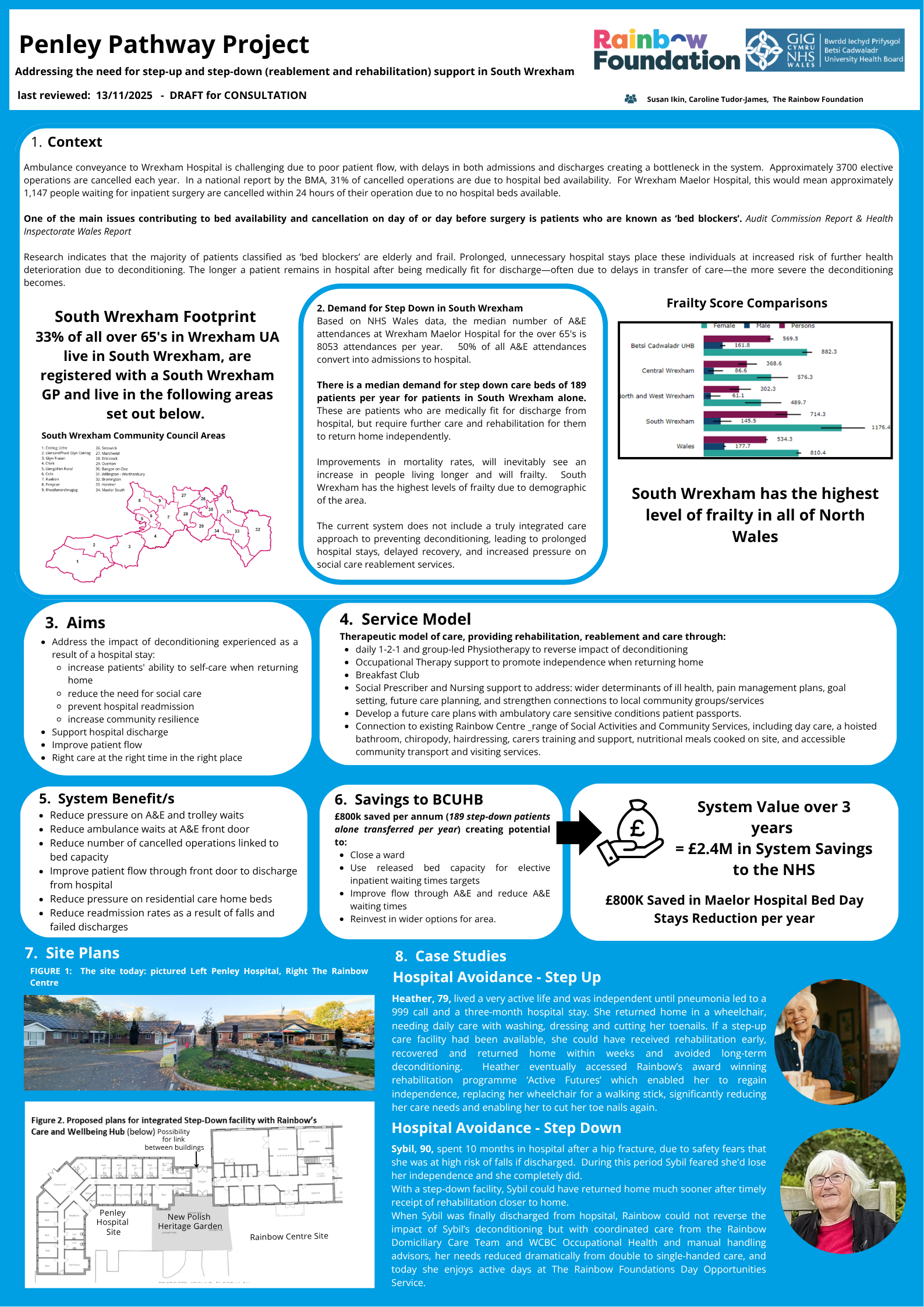
THERE IS A BETTER SOLUTION: Rainbow Pathway
The Rainbow Pathway could transform Penley Hospital from an empty building into a vital community health asset where older people can:
- Recover after illness or a hospital stay.
- Rebuild strength and confidence.
- Regain independence.
- Access support closer to home.
- Receive compassionate end-of-life care within their community.
- Give carers access to respite and practical support.
Most importantly, it would give people the support they need before a crisis develops, while helping to free up hospital beds for those who need them most. At the same time, our model could save the Health Board £800,000 annually.
Our goal is simple: Recover. Rebuild. Return Home.
WHY THE RAINBOW FOUNDATION?
The Rainbow Foundation is an award-winning, nationally endorsed Ageing Well Centre of Excellence for Wales, with a strong track record of supporting older people, carers and communities across the region. This proposal does not seek to create something new from the ground up; rather, it builds on established services, trusted partnerships and deep local knowledge that are already delivering positive outcomes. We already:
- Have physical proximity to Penley Hospital.
- Deliver services that support independence and wellbeing.
- Have a proven track record of getting people back on their feet.
- Work directly with older people, carers and families every day.
- Understand the challenges faced by rural communities, including transport.
- Have established partnerships across health, social care and the voluntary sector.
- Are already rooted in the communities we serve.
- Deliver elements of the services described in all three options of the health board’s. consultation document and would accommodate additional NHS services on site.
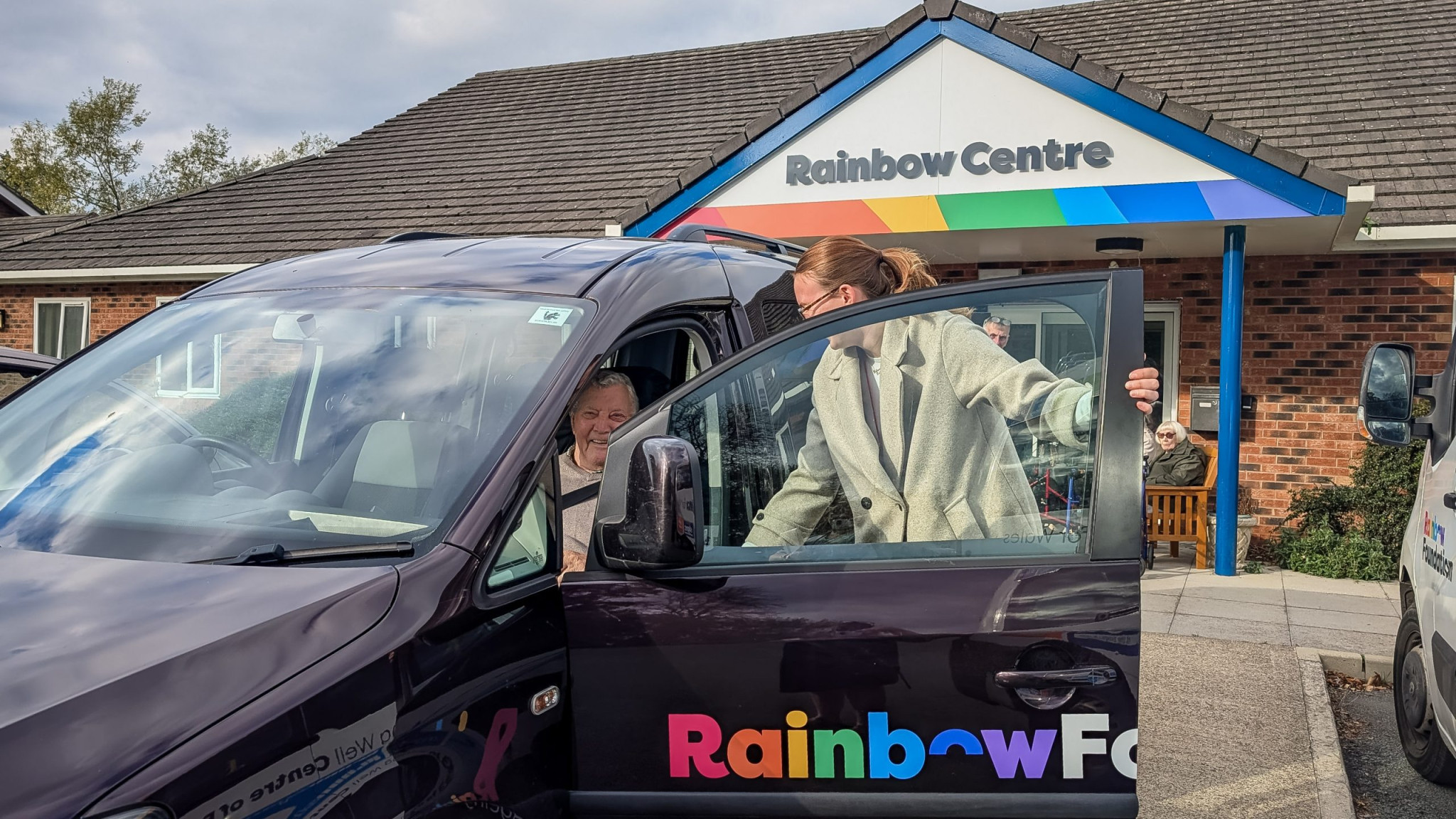
Fleet of community transport vehicles
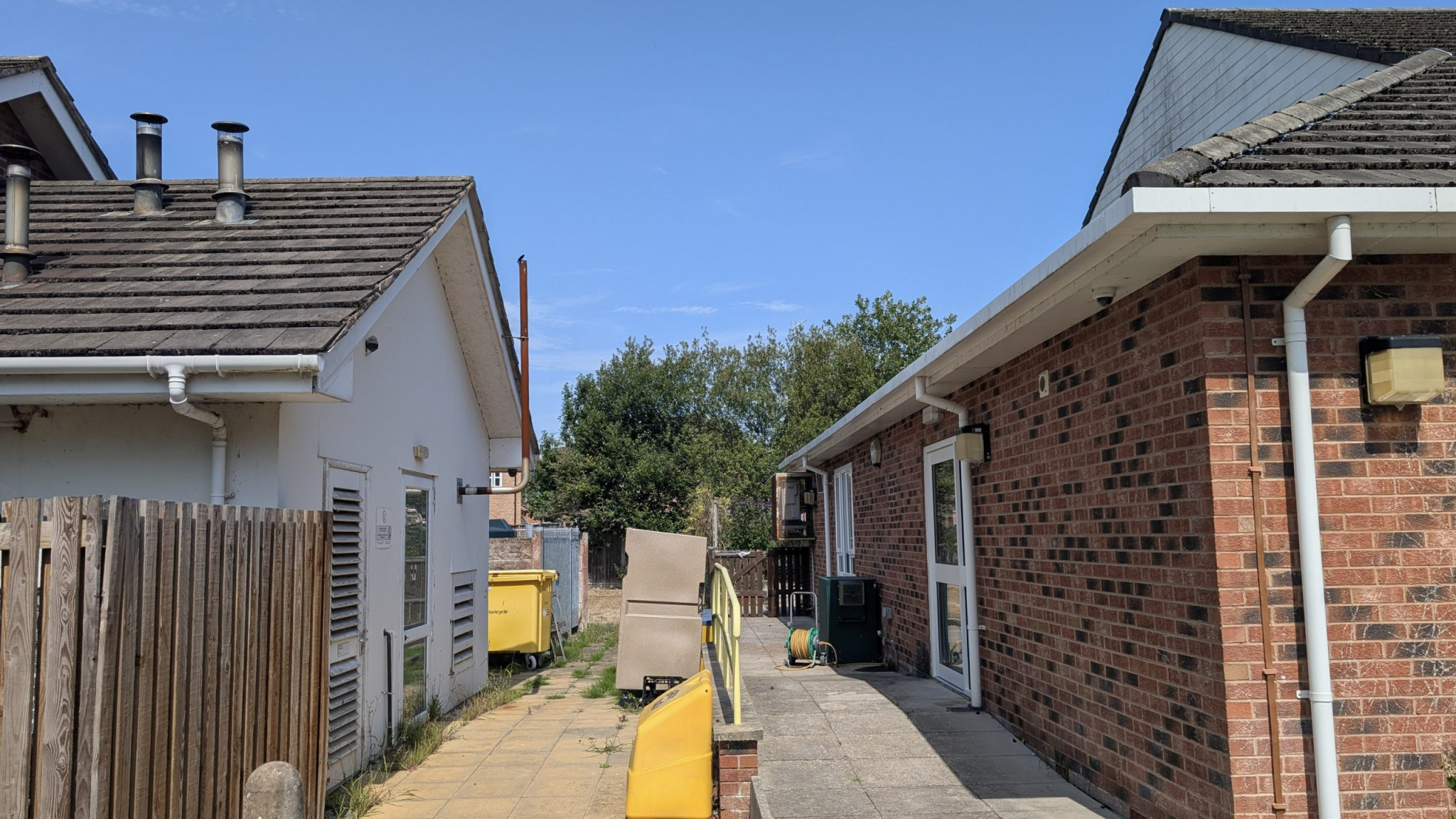
Physically close to Penley hospital and easy to connect the buildings
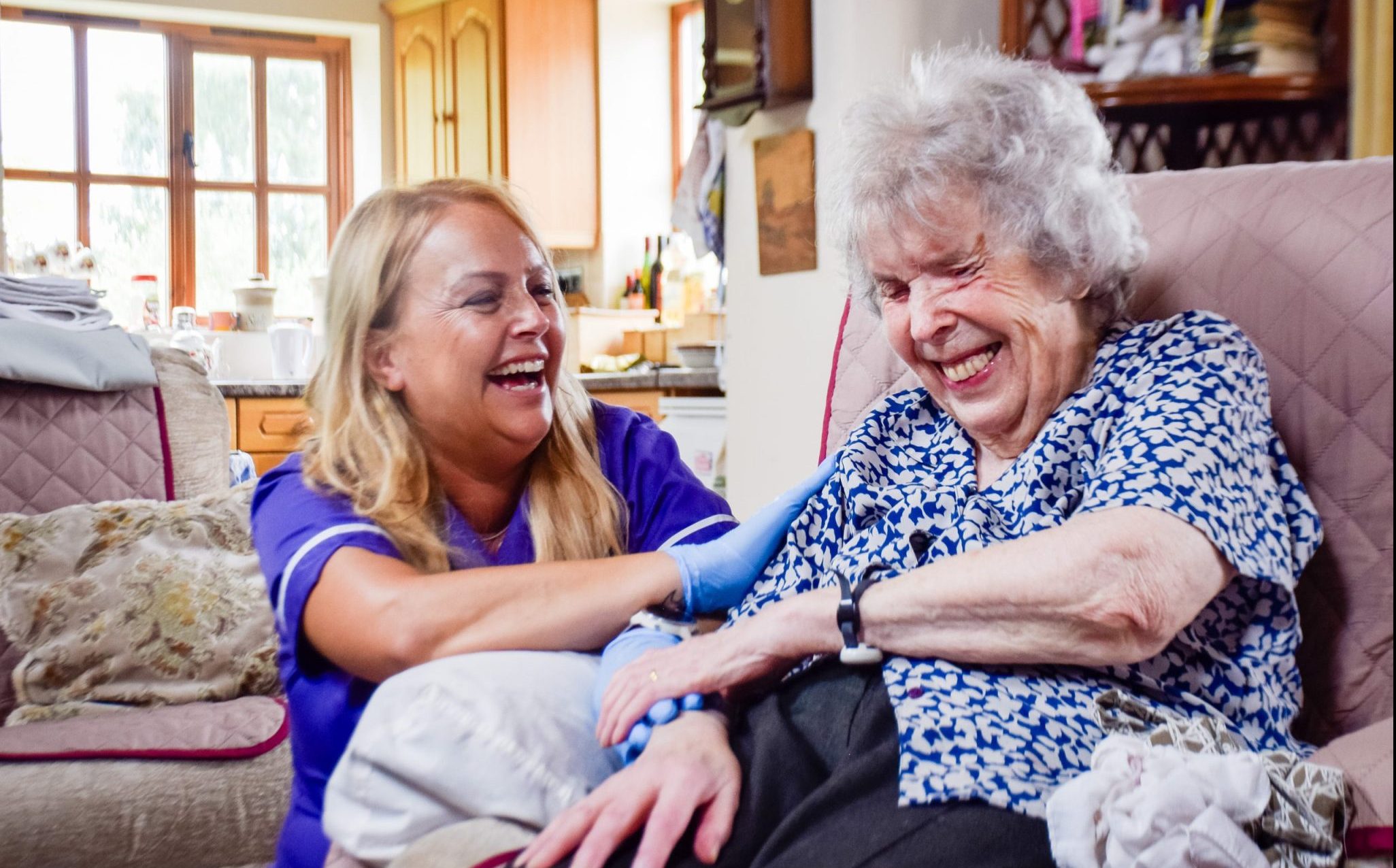
Fully trained team ready to go
WHAT HAPPENS NEXT IS UP TO ALL OF US
The future of Penley Hospital will be decided in the coming months.
The question is simple: Do we continue allowing people to become trapped in hospital beds when they could be recovering closer to home?
Or do we create a local solution that helps people regain their independence, supports families and strengthens our community?
Have your say. Support the Rainbow Pathway.
Because this isn’t about a building, it’s about people.

A HOSPITAL WITH HISTORY
Previously the Penley Polish Hospital, Penley Hospital has deep-rooted connections to the area’s rich Polish heritage and the remarkable story of the Polish community that made Penley their home.
Following the Second World War, Penley became home to one of the UK’s largest Polish resettlement communities under the Polish Resettlement Act of 1947. The village provided sanctuary to displaced Polish servicemen, women and families who had supported the Allied war effort but were unable to safely return to their homeland.
Today, descendants from across the UK and around the world continue to trace their family roots back to Penley. As memories fade and historical records become more vulnerable, it is increasingly important that these stories are preserved.
Through community engagement, heritage research, oral history recording, educational activities and public events, our project Polish Heritage Penley is working to uncover, preserve and share this remarkable chapter of local and international history. By bringing together residents, descendants, volunteers and historians, the project will ensure that the legacy of Penley’s Polish community continues to inspire and inform future generations.
Find out more about the project and how to get involved by visiting our Polish Heritage Penley page.
NEWS COVERAGE